


How to Apply for a Thai Work Visa
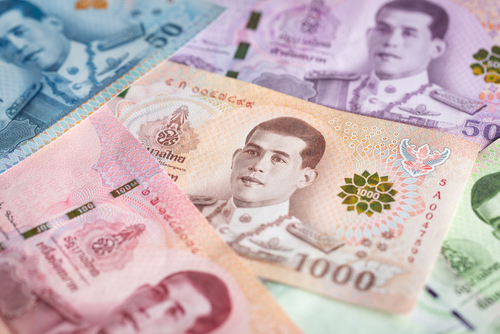
A growing number of foreigners are moving to Thailand so they can work in a year-round tropical paradise that provides all the contemporary comforts of the West.
The Kingdom of Thailand offers lush jungles, sandy beaches, colorful Buddhist temples, and spicy, aromatic cuisine. Modern infrastructure, stylish hotels, and well-regarded international schools also distinguish the South Asian kingdom. The quality of Thai healthcare services regularly rank it among the top 10 countries in the world, enabling the medical tourism sector to draw visitors from both hemispheres.
Prices are also significantly lower than those found in other exotic locales. According to Numbeo (https://www.numbeo.com/cost-of-living/country_result.jsp?country=Thailand), the cost of living in Thailand is 34 percent lower than in the United States, plus rents average 62% less.
The capital city of Bangkok -- a cosmopolitan blend of traditional culture and vibrant nightlife -- is a popular destination for tourists and expats alike. Other popular cities include Chiang Mai, which draws visitors to its temples, mountains, and more laid-back urban atmosphere, along with the beaches of Hua Hin, Phang Nga, Phuket, and other islands along the Andaman Sea coast.
Finding Employment in Thailand
Numerous industries welcome foreign employees. Those include education, technology, hospitality, marketing, and non-governmental organizations (NGOs) and charities. There are numerous recruiters and websites who can help you find a job, including industry-specific sites as well as job boards hiring for a variety of industries. American-based online companies like Craigslist, Monster, LinkedIn and GoAbroad (https://www.goabroad.com) often have Thai openings, as do local sites such as JobsDB (https://th.jobsdb.com/th) and publications like the Bangkok Post (https://job.bangkokpost.com/mobile/en).
Most Americans are employed in Thailand to teach English to local Thai people. You will need at least a bachelor’s degree to land a teaching job. You may also need to obtain a TEFL (Teaching English as a Foreign Language) certificate, which can be obtained through a four-week course through government-accredited schools. Ajarn (https://www.ajarn.com/) is one of the best websites for finding find teaching jobs. The company also offers an Ajarn Recruit website with both teaching and non-teaching opportunities.
Many other industries have sites geared to their needs. Thai NGO (https://www.thaingo.org/jobs) features local NGO jobs, while ReliefWeb (https://reliefweb.int) covers Thailand and other countries. Hospitality is the focus for http://www.thaihoteljob.com/thaihoteljob/html/index.php.
Since Bangkok is a global business hub, many foreigners also come to Thailand to work at multinational companies as managers or in other professional roles. The Bangkok Metropolitan Region plays hosts to numerous American multinational firms doing business in Thailand and the ASEAN region (Association of Southeast Asian Nations). There are also hundreds of other multinational firms with offices in Bangkok whose headquartners are in Europe, Australia, Japan, South Korea, China and other Asian countries.
Although it is best to arrange your employment and work visa while still in the United States, some people wait until they are in Thailand to find work. If you prefer searching for a job once you arrive, it is best to apply for a visa while still in the United States that will allow you to stay in Thailand for 90 days (such as the TR visa), thus maximizing the time you have in the country to network and find opportunities.
A little pre-planning, like making sure you bring any necessary documents from home such as college transcripts and degrees, is super important because it will be costly and time-consuming getting these documents shipped to Thailand. It is also a good idea to compile a list of schools or businesses operating in Thailand that may be interested in hiring Americans. For example, The American Chamber of Commerce in Thailand, publishes a director on their website of its member companies: Business Directory Search - CM Member Search - AMCHAM Thailand
Step 1: Get Your Non-Immigrant Visa
Before you can obtain a Thai work permit, you must first obtain a Non-Immigrant Visa Category “B” visa in the United States. Please keep in mind that you cannot work in Thailand with only a tourist visa.
There are two types of “B” permits. Most applicants seek Non-Immigrant B, which allows foreigners to teach in Thailand or work in various approved sectors. The Non-Immigrant Visa IB (international business) is for people traveling to Thailand to start or run businesses, and for other investment-related purposes.
The process to apply for the Type B Visa begins with an initial application through the Thai Embassy or Consulate. Thailand has four consulates and embassies in the United States: Chicago, Los Angeles, New York, and Washington, D.C. More information is available from the Thai Embassy at https://thaiembdc.org/consular-services/non-immigrant-visas/non-immigrant-visa-category-b, including access to an online application.
Requirements for an online (e-Visa) application include:
- Two passport-sized photos (2x2) taken within the last six months against a light background and providing a full-face view of the applicant.
- A copy of your valid U.S. passport valid for at least six months.
- A recent bank statement showing at least $700 per person or $1,500 per family.
- A copy of your reservation or flight reservation from the United States to Thailand.
- Teachers who have made arrangements to teach at a specific school in Thailand will need a letter of acceptance from the school, a resume, and proof of teaching credentials.
- For the IB business visa, provide a letter from your company indicating the applicant’s position, length of employment, salary, purpose of visit and length of stay in Thailand; plus a letter of invitation from the Thai trading or associated partner companies indicating length of stay, period of stay, and purpose of your visit.
- A copy of any previously-held Thai work permit.
- An original letter of verification stating that the applicant has no criminal record via a background check. The verification must be valid with the last three months and issued only by a state law enforcement agency or Federal Bureau of Investigation.
Since consulates are currently closed to in-person visits, you will need to print the online application and mail it to the e-Visa Section. (The mailing address and other details can be found at https://thaiembdc.org/consular-services/non-immigrant-visas/non-immigrant-visa-category-b.) You will also need to send your passport, a signed e-appointment slip showing the barcode reference number from the website, and a self-addressed, stamped envelope. The government processing fee for each visa is $80. Fees must be paid using a money order payable to “Royal Thai Embassy”. Processing time is about two - three weeks, and the visa is valid for 90 days.
Step 2: Obtain a Certificate of Entry
All visitors must need to obtain a government Certificate of Entry (COE) before they can travel to Thailand. The COE provides documentation about your medical insurance. You should apply for the COE at least 15 days before your intended date of travel. The application can be found at https://coethailand.mfa.go.th/regis/step?language=en.
To obtain the COE, you will need to submit:
- Passport and visa or re-entry permit.
- A medical health policy summary that shows the start and end dates; coverage for COVID-19 medical expenses; and a minimum coverage of $100,000 in. A list of Thai health insurers can be found https://longstay.tgia.org/home/companiesstv.
- Confirmation of Alternative State Quarantine accommodations from a hotel. (COVID-19 quarantine requirements have changed through the pandemic, so check with the hotel for current requirements.)
- Copy of your flight confirmation or reservation.
Step 3: Obtain a Thai Work Permit
Once you obtain your visa and your COE, you can visit Thailand for up to 90 days while you are applying for a work permit. You will not be able to accept a job until you obtain a work permit, which takes about seven days to issue. Both you and your employee need to provide a number of documents concerning the organization and the job you will be hired to perform.
Employees will need to provide these documents as part of the application process:
- Six passport-sized photos (2x2).
- Medical certificate issued within the last six months.
- Valid U.S. passport.
- Signed letter of employment.
- Certificate of education (if applicable, such as for teaching).
- Working address in Thailand.
- Applicants who are married to Thai nationals must provide additional documents.
Your work permit is typically valid for up to one year. To stay longer in Thailand, you can extend the work permit for additional one-year periods. You will also need to extend your Type B visa for one-year increments, beginning before the initial one-year period expires.
We Can Help if You Need Assistance
If you prefer not to deal directly with the government, you can use a courier service such as Visa Supply to help you obtain your non-immigrant visa more quickly and to navigate the Thai work permit requirements. We work directly with the Thai consulate in the United States, and typically turn around applications within a few days.
The Thai consulate will reject applications if there are errors or omissions, delaying your submission. Processing time is also slower when you mail the application. Our experienced team will make sure your application is complete before submission. We can also take your visa photo and prepare supporting documents that comply with government specifications. As a private vendor, we charge a $150 fee to help with the Thai work visa, plus $35 for overnight FedEx shipping and $80 for the Thai consulate fee. Please e-mail Michael at michael@visasupply with questions or call the Visa Supply office at 404-682-5445.