


Ghana Visa Requirements
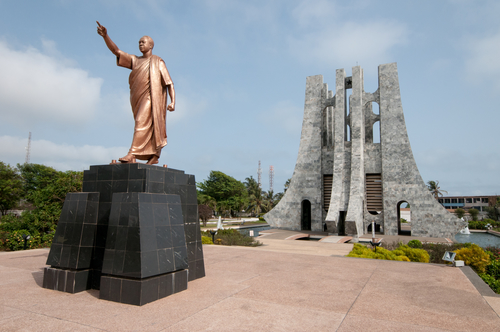
Ghana is located on the Atlantic coast in West Africa. The region was home to several empires for centuries (led by the Kingdom of Ashanti) before foreign powers began battling for dominance during the era of European colonization. Ghana was one of the few African states that actively resisted colonization during the 1700s and 1800s, fighting for more than a century against Great Britain’s effort to control the country. Finally, after decades as a British colony, Ghana became the first country in Africa to gain full political and economic independence in 1957.
Today some nine million Ashanti people live in Ghana. The people of the Asante region around Lake Volta and the Gulf of Guinea became wealthy from the vast gold deposits in the area (which led Europeans to name the region the “Gold Coast”). The Asante capital of Kumase was in the center of the Trans-Saharan trade routes, further increasing the country’s riches. The country’s history from medieval empires through centuries of colonization and its independence as a strong, stable republic make it an attractive destination.
Ghana is particularly attractive to American travelers because residents of the country speak English. There are also several direct flights to the country, making it an ideal destination for first-time travelers to Africa. Accra, the nation’s capital and largest city, was also capital of the British Gold Coast. Kumasi, the former Ashanti capital, is the second largest. Other popular tourist stops include the rainforests of Kakum National Park, the savannahs of Mole National Park, and Wli Falls in the Agumatsa Wildlife Sanctuary. Tours of former slave trade sites are a popular feature: President Barack Obama visiting Cape Coast Castle and Museum, a slave-trade fort and UNESCO World Heritage site, when he made Ghana the first African country he visited as president.
The Ghana government has declared 2019 “The Year of the Return,” encouraging people of African descent around the world to come to Ghana and reconnect with their African heritage. Ghana was already a major component in the emerging black travel movement, drawing visitors who want to explore their African roots while also experiencing the contemporary urban culture of sub-Saharan Africa.
Americans who plan to visit Ghana must obtain a visa before they travel, as visas are not issued upon arrival in the country. Applicants can mail in their application and supporting materials; appear at the Ghana embassy in Washington, D.C.; or visit one of the consulates in New York City or Houston. A single-entry visa is available for $60 that is good for three months from the date of issue. However, we recommend most visitors obtain the multiple-entry visa for $100. This visa is generally good for up to three years and provides more flexibility for scheduling your upcoming trip (or future visits).
There are two major types of visas for visiting Ghana: the tourist visa (https://www.visasupply.com/ghana-tourist-visa.html) and the business visa (https://www.visasupply.com/ghana-business-visa.html). Requirements for the tourist visa include a current U.S. passport; two passport-sized color photos of each member of your party; two copies of your visa application; and a copy of your airline itinerary. You will also need either a copy of an itinerary for your hotel or tour group; or a signed letter of invitation from a Ghana resident with details about your trip (plus a copy of their passport or national ID card). Official requirements and a checklist of necessary documentation are also available at the embassy website, https://www.ghanaembassydc.org/visas. Be sure to follow all the instructions and answer each application question to ensure prompt processing.
Vaccinations are not required to obtain a Ghana visa, however, the CDC and the U.S. State Department recommend a yellow fever vaccination certificate for citizens entering Ghana (https://travel.state.gov/content/travel/en/international-travel/International-Travel-Country- Information-Pages/Ghana.html#). The yellow fever vaccination certificate may be checked at point of entry into Ghana so please be prepared.
Applications should be mailed to the consulate as least one month before your expected departure date. The website states that it normally takes 10 business days to process a mail-in application and two days for walk-in. (Expedited processing with quicker turnaround is available for higher fees -- $100 for single-entry, $200 for multiple-entry). However, we recommend filing 30 days before you need the visa, allowing for plenty of mailing time and other contingencies (such as consular officials asking for additional documentation).
You can call on Visa Supply to help ensure you fill out your documents correctly and completely. We can hand-carry your current passport and your Ghana visa application to the consulate, ensuring no materials are lost in transit. When the visa is ready, we’ll return to the consulate, pick up your passport and visa, and ship it to you using Federal Express. We can also provide courier service that can turn around the documents within one business day.
If you have further questions about Ghana visa requirements or want Visa Supply to help file your application, you can schedule a telephone call through our website. Our visa experts can provide a free consultation and help guide you through every step in the process to ensure you have a successful visit to Ghana.