

Bermuda One-Year Residency Targets Digital Nomads, College Students
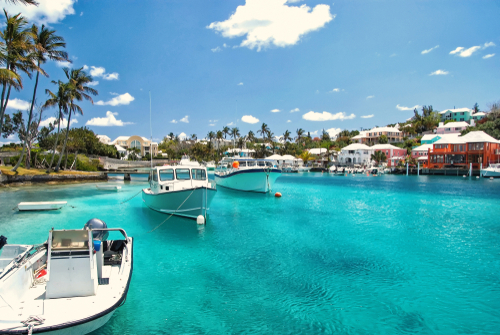
The island of Bermuda has joined the global movement to attract remote workers and students as long-term visitors through a temporary residential visa program.
Remote workers currently working from home or overseas, as well as university students currently studying from home, can apply for the Bermuda One-Year Residential Certificate. Applicants must have the means to support themselves through financial means based outside of Bermuda.
The Mid-Atlantic territory within the British Commonwealth is one of several jurisdictions that introduced “digital nomad” programs during 2020 in response to the COVID-19 pandemic. Tourism typically accounts for 28 percent of Bermuda’s gross domestic product. It hosted more than 770,000 visitors in 2018 while leisure spending by air and cruise passengers neared $500 million. However, Bermuda tourism plummeted in 2020 as most countries closed their borders to non-residents.
The new program, developed by the Bermuda Tourism Authority, the Bermuda Business Development Agency, and Ministry of Labor, seeks to partially replace the lost tourists with temporary new residents. According to an MBO survey cited by The Wall Street Journal, there are more than 10 million U.S. citizens who combine travel with remote work -- including millions of digital nomads who regularly move between countries while they work as freelancers, remote employees, or entrepreneurs.
British Culture in the Islands
Known for its pink sandy beaches and rugged coral reefs, Bermuda has long been a favored vacation destination for Americans from the East Coast (such as Mark Twain). Located within the Atlantic Ocean’s Gulf Stream, Bermuda lies north of the Caribbean Sea, providing cool winters and tropical summers. The island chain was discovered in 1503 by Spanish explorer Juan de Bermúdez. However, it was not settled until 1609 when a British ship heading for Virginia ran aground on one of Bermuda's many perilous reefs. Three years later, the Town of St. George was founded, which remains the oldest continually inhabited English town in the Americas. Bermuda has also been a British territory since 1612, and British culture and customs remain strong.
The country, which only covers about 20 square miles, is comprised of numerous small islands linked by roads and bridges. The islands are served by an international airport and three cruise ship ports in Hamilton, St. George, and at the Royal Naval Dockyard. The capital city of Hamilton blends an international business center with pastel-colored buildings, museums, shops, cathedrals, and cosmopolitan restaurants around and near Front Street. The Colonial architecture of King’s Square dominates the original capital of St. George. The Royal Naval Dockyard -- headquarters for Great Britain’s Western Atlantic fleet until the Cold War ended -- was transformed into a tourist destination with shops, restaurants, and local excursions.
However, many of Bermuda’s most unique and colorful attractions are along English-style roads and villages, including the Bermuda Botanical Gardens, Blue Hole Park, and Crystal Caves. The Bermuda Railway Trail National Park is an abandoned railroad bed that spans all the islands. The trail offers hikers and bicyclists unique views of isolated coves, sheer cliffs, lush foliage, and the world’s smallest drawbridge. Gibbs Hill Lighthouse features panoramic views of the picturesque South Shore. Snorkeling and scuba diving are popular draws, as the shallow waters and rocky reefs around the islands provide easy access to a number of shipwrecks.
Bermuda’s position as a global business and financial center also makes it attractive to remote workers. The islands feature modern infrastructure, contemporary hotels, high-speed Internet connections, efficient public transportation systems, restaurants, British pubs, and retail stores stocked with Western goods. Bermuda is considered one of the safest countries in the world and has reported relatively few cases of COVID-19.
The main challenge for digital nomads is the territory’s high cost of living. A traditional destination for upscale tourists and wealthy residents, Bermuda ranks as the most expensive country in the world to live. Since many digital nomads are young singles with limited financial means, they may favor other, more affordable countries. According to Numbeo (https://www.numbeo.com/cost-of-living/country_result.jsp?country=Bermuda), a one-bedroom apartment averaged $2,500 per month in February 2021 – 133% higher than the U.S. average. The total Bermuda cost of living was also 106% higher than that of the United States.
Applying for Bermuda’s Remote Work Visa
Remote workers and students must first submit an application form (https://forms.gov.bm/work-from-bermuda/apply). Applicants will receive a response within five working days. Approved candidates can immediately relocate to Bermuda. The price is $263 per applicant, and the 12-month permit can be renewed on a case-by-case basis
The government requires applicants to demonstrate “substantial means and/or have a continuous source of annual income” so they can live without needing to find a job in Bermuda. Those without sufficient savings must also prove employment with an established company, or own a company which is registered and operates outside of Bermuda. The self-employed must provide documentation about their firm. Students must provide evidence they are enrolled in a research, undergraduate, graduate, or doctorate program.
Other requirements include:
- Valid U.S. passport.
- Be at least 18 years old.
- No criminal record.
- Proof of valid medical insurance.
For more information about Bermuda’s remote visa or for digital nomad visa programs in other countries, feel free to contact Visa Supply by calling 404-682-5445 or email us at admin@visasupply.com.