

How to Obtain a Philippines Retirement Visa
Updated November 26, 2022 -- Please see editor’s note at the bottom of the page
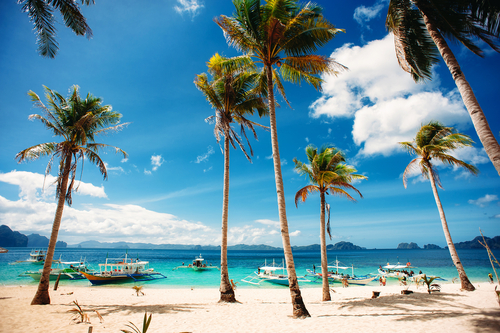
Record numbers of foreign retirees have flocked to the Republic of the Philippines in recent years, drawn by low costs, high living standards, and exotic tropical settings. The country is comprised of more than 7,000 islands featuring crystal-blue waters, white sandy beaches, and warm weather year-round. English is widely spoken in the Philippines; making is easy to communicate with most locals. Eleven international airports provide convenient access to Southeast Asia and the world, while affordable local airlines make domestic travel easy.
The Philippine government encourages foreigners to take up residence in the country through dedicated retirement visa programs. The republic issued a record 6,437 retirement visas in 2018 (10 percent more than the prior year) and has issued more than 63,000 since the program began in 1987, according to the Philippine Retirement Authority (https://pra.gov.ph). More than 200,000 expats currently live in the country. Many retirees come from Asia, but the top 10 sources also include the United States, United Kingdom, Germany, and Australia.
While most retirees come here to enjoy the warm tropical climates, some might prefer the mountain’s lower humidity and cooler temperatures. The capital city of Manila is among the most popular retirement destinations, offering a modern cosmopolitan lifestyle complete with Western shopping centers, theaters, nightclubs, and restaurants. Cebu City, the “Queen City of the South,” combines urban amenities with easy access to the beaches and mountains. The seaport of Dumaguete often ranks among the world’s top retirement cities, with beach resorts, scuba diving, snorkeling, and dolphin and whale watching. Palawan and Boracay also host world-class diving centers. Mountain hiking is a major attraction in Baguio and Tagaytay. Subic Bay -- site of a former U.S. Navy base that was the largest American military installation overseas -- is known for its abundance of beaches, tropical gardens, and camp sites.
Philippines Retirement Visa Benefits and Options
The Philippine Special Resident Retiree’s Visa (SRRV) carries a number of benefits. The SRRV provides permanent non-immigrant status with multiple-entry privileges. Holders are exempt from customs duties and taxes on imported personal effects; from exit clearance and reentry permits; and from paying travel taxes if the retiree has not stayed in the Philippines for more than one year since his or her last entry. The country also does not tax foreign income, so U.S. citizens do not face double taxation. Additional benefits can be found at https://www.philippineconsulatela.org/consular-services-2/visa/retiring-in-the-philippines.
The Bureau of Immigration offers five options for obtaining an SRRV. The options vary by type of eligibility as well as financial requirements. Applicants must deposit a certain amount of money in a government-approved Philippine bank during their residency (known as a visa deposit). Amounts vary by whether the applicant receives a retirement pension.
The five options are:
- SRRV Classic, the most popular choice, is for healthy and active principal retirees who want to use their visa deposit towards renting an apartment or buying a condominium unit. Those who are ages 50 and higher would deposit up to $20,000, while retirees 35 to 49 must deposit $50,000. (NOTE: Foreign citizens are not allowed to own land or unattached homes in the Philippines, but they can buy condos.)
- SRRV Smile is available to healthy retirees at least 35 years old who place $20,000 in the visa deposit.
- SRRV Human Touch is for ailing retirees who need medical or clinical services. Applicants need to deposit $10,000; have a monthly pension of $1,500; and health coverage that is acceptable in the Philippines.
- SRRV Courtesy is designed for former Filipino citizens (ages 35 and up) and foreign nationals (50 and up) who served in diplomatic or similar roles. The visa deposit amount is $1,500.
- SRRV Expanded Courtesy covers foreign nationals who served in the military, receive a monthly pension of at least $1,000, and make a visa deposit of $1,500.
For more information about SRRV options and other details, please visit https://www.philippineconsulatela.org/wp-content/uploads/2015/11/INFORMATION-GUIDE-SRRV-BY-PRA.pdf.
Qualifications and Documentation
To qualify for an SRRV, an applicant must be a foreign national or former Filipino citizen at least 35 years old. The SRRV can also be used for a spouse and for unmarried children under the age of 21. Applicants also must meet the income and/or pension requirements outlined above.
You must apply for the SRRV while you are in the Philippines. It typically takes 20 days to process the SRRV application. A checklist of requirements and PDFs of the forms listed below are available at https://pra.gov.ph/downloads.
Basic requirements include:
- A valid passport with a valid temporary visitor’s visit.
- A completed SRRV visa application (https://pra.gov.ph/wp-content/uploads/2019/07/Application-Form-Principal-English.pdf).
- Eight passport-sized photos (2x2).
- An original valid medical clearance form.
- An original valid police clearance form from your country of origin. Also, if you have been in the Philippines for more than 30 days, you also need clearance from the Philippine National Bureau of Investigation (NBI).
- Proof of your SRRV visa deposit remitted to a government-approved bank.
- For retiree spouses, their marriage certificate.
- For dependent children, their birth certificate(s).
The government charges a one-time processing fee of $1,400 for the principal applicant, plus $300 for each dependent application. The SRRV also carries an annual fee of $360, which includes the principal retiree and two dependents. Each additional dependent adds $100.
In addition to the SRRV, you will also need to get an Alien Certificate of Registration (ACR). The ACR I-card carries an embedded microchip with personal information. While the ACR serves as your re-entry permit, it does not replace your passport or visa stamps. The ACR costs $50 and must be renewed annually.
Getting Started with Long-Term Tourist Visa
For Americans who are considering traveling to Manila to obtain the Philippines Retirement Visa, Visa Supply recommends first obtaining a long-term tourist visa. Since it takes 20 business days to process the SRRV application, the normal 30-day short-term visa leaves you little time to make arrangements for retirement. The long-term visa provides 59 days in the Philippines, providing plenty of time to explore the islands, make a final decision on your retirement destination, and complete the application process. More information about obtaining a Philippine long-term tourist visa is available on our website at https://www.visasupply.com/philippines-long-term-tourist-visa.html. If you require assistance to secure a long-term tourist visa for the Philippines, please email Michael at michael@visasupply.com.
Americans and other residents in the United States with questions about obtaining a long- or short-term visa to travel to the Philippines -- or who would like us to help them complete the application -- can schedule a telephone call through our website.
Editor’s Note: The Philippines Retirement Authority is accepting applications for the SRRV Program, however, you must apply for the visa from within the Philippines. As mentioned above, you can either apply for a long-term tourist visa that will allow you 59 days in the country, or you can travel to the Philipines with just your U.S. passport and have 30 days inside the country, but please make note of the information below:
- U.S. citizens do not require a visa for stays of up to 30 days if they are traveling for tourism, pleasure, short-term business meetings, or visiting family.
- U.S. citizens should have a valid passport that does not expire within six months of their date of arrival into the Philippines, AND an onward/return ticket that shows they are leaving Philippines within 30 days (if traveling to the Philippines without a visa) AND proof of accommodations for at least 2 nights.
- Pre-departure COVID testing is no longer required for fully vaccinated travelers. For unvaccinated or partially vaccinated travelers, a laboratory-based rapid antigen negative test result within 24 hours prior to the date and time of departure from the country of origin is required for entry to the Philippines.
- The Philippine government requires all arriving passengers to complete a BOQ electronic Arrival Card (eArrival Card) . You can register up to three days in advance of your departure for the Philippines through the website. Remember to save a copy of the transaction number and QR code, which will be required by Philippine immigration authorities.
- It is recommended to purchase travel insurance before any international trip in case of medical emergencies. We advise getting the Geo Blue Voyager Single Trip Plan.
- Please visit the website of the U.S. Embassy in the Philippines for the latest information: COVID-19 Information | U.S. Embassy in the Philippines (usembassy.gov)
For any questions regarding the Philippines Retirement Visa or travel to the Philippines, please send an email to Michael at michael@visasupply.com.