

How to Obtain a Brazil Retirement Visa
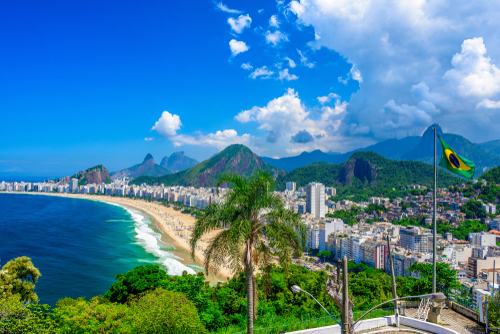
Brazil remains a favored destination for foreign retirees attracted to the natural beauty, equatorial climate, and low cost of living in South America’s largest country. A blend of European, African, and indigenous influences give the Federative Republic of Brazil a rich history and welcoming culture that is rooted in its strong colonial ties to the Portuguese Empire. Its majestic landscapes span Amazon rainforests, golden beaches, almost 7,500 miles of Atlantic coastline, oceanic archipelagos, rugged mountains, high ridges, flat plains, and rolling hills.
Living costs in Brazil average more than 44% lower than those in the United States, while rents are almost 80% less, according to Numbeo (https://www.numbeo.com/cost-of-living/country_result.jsp?country=Brazil). Retirees are also drawn to Brazil’s balmy weather, healthy lifestyle, and friendly atmosphere. Free access to universal healthcare is available, although about 25% of residents choose to pay for private medical services. The majority of foreigners reside in the major cities of Sao Paulo, Rio de Janeiro, Brasilia, or Macae. Brazil is the only predominantly Portuguese-speaking nation in South America. However, only about five percent of its residents speak English, and English proficiency is rare outside of major cities.
In 2019, more than six million tourists visited Brazil before the COVID-19 pandemic halted foreign travel. By early 2022, the country had dropped many coronavirus testing requirements and foreigners began returning. Fully vaccinated travelers no longer need to quarantine or provide proof of a negative COVID-19 test result, while unvaccinated travelers or those not fully vaccinated only need to present proof of a negative test. It takes about 10 hours to fly from Atlanta to the Brazil’s largest city, San Paulo on Delta Airlines, with connecting flights to Rio de Janeiro and Brasilia.
Brazil’s natural and manmade wonders offer diverse destinations for retirees of all interests. Rio de Janeiro, the most visited city in Brazil, is also the top retirement destination. Rio is home to the iconic 98-foot Christ the Redeemer statue overlooking Guanabara Bay and the world’s largest carnival, the annual Carnaval do Rio de Janeiro. Rio offers a cross-section of Brazil’s top tourist treats, including its famous tropical beaches, seaside resorts, samba music, historic architecture, and Tijuca National Park, the world's first urban forest and UNESCO Environmental Heritage and Biosphere Reserve. San Paulo, the largest city in Brazil, is an urban destination with office towers, 62 types of cuisine, the country’s largest zoo, one of the largest aquariums in Latin America, and museums featuring some of the continent’s best fine arts collections. The most popular city for expats is Joao Pessoa, ranked as the second “greenest” city in the world. Other top cities for retirees include Brasilia, with its modern architecture and vibrant nightlife; Salvador, where the central Pelouinho district brings colonial history to life; and Belem, which blends modern skyscrapers, colonial squares, and Atlantic beaches.
There are also more than 70 national parks and 22 UNESCO World Heritage sites in Brazil. From Manus, the leading gateway to the Amazon rainforest, you can book an Amazon River boat tour, relax on a riverside beach, or tour the National Park of Jau. Florianopolis’s 40 mainland and island beaches in southern Brazil are considered the country’s best. Other natural wonders include the 247 waterfalls that comprise Iguacu Falls in Iguacu National Park; the botanical gardens at Campinas; Rio’s renowned Copacabana and Ipanema beaches; and the gold- and diamond-encrusted churches of Ouro Preto.
Brazil Retirement Visa Programs
Citizens of the United States and most other countries who hold a valid passport do not need a visa to visit Brazil for business or leisure trips lasting less than 90 days. Travelers with valid passports are no longer required to pass a COVID-19 test; they need only provide sworn statements that they are not infected with the coronavirus and that their medical insurance covers any COVID-related treatment or hospitalization. For longer stays, visitors will need to obtain one of the several temporary or permanent residency visas available.
The primary retiree visa in Brazil is the permanent visa (VIPER), which is available to foreign nationals ages 60 and older who intend to live in the country for more than two years. (There is also a temporary visa for retirees who plan to stay less than two years.) The main qualification for VIPER applicants is that you must receive a monthly pension, annuity, or similar regular guaranteed income of at least $2,000 USD. Retirees with dependents (spouse, parents, and/or children up to age 24) may also be required to meet higher income standards. You can also include up to two dependents on your retirement visa without extra income; if there are more than two, you will need an addition $1,000 in monthly income per dependent.
You must provide the following documentation:
- Letter informing the reason for moving to Brazil.
- Declaration from institution detailing monthly retirement income.
- Declaration from banking institution that applicant can transfer the funds to Brazil.
- Proof of retirement issued by an official institution.
Documentation must be certified by a notary public or county clerk, and then translated into Portuguese by certified Brazilian translator.
After you reside in Brazil for four years under the permanent retiree visa, you can apply for Brazilian citizenship. Brazil recognizes dual citizenship, so you are not required to renounce your U.S. citizenship.
How to Obtain a Retirement Visa
Residents of the United States may need to visit the Brazilian embassy or one of its U.S. consulates to obtain a retirement visa. The process typically takes about four to eight weeks, depending how quickly the central government in Brasilia takes to approve the application.
The first step in the process is to contact the closest consulate and set up an appointment for a visa interview. Brazil has 10 U.S. consulates, including an Atlanta consulate (http://atlanta.itamaraty.gov.br/en-us) servicing residents of Alabama, Georgia, Mississippi, South Carolina, and Tennessee. Another consulate in Miami serves Florida residents.
Go to the consulate’s website to print and fill out a Visa Request Form Receipt. A tutorial and link is available at http://atlanta.itamaraty.gov.br/en-us/visa_form.xml. You will submit your application and related information via the consulate’s E-CONSULAR online system. (For the Atlanta consulate, visit their website at http://atlanta.itamaraty.gov.br/en-us/how_to_apply.xml).
Follow the links on the website to set up an E-CONSULAR account. Once that is completed, the next step is to collect all required documents and fill out a retirement visa application. Upload images of all your documentation to the system. When your form and documents are complete, submit them to the consulate via E-CONSULAR.
After consulate staff members review your submission, they will respond by email. They may ask you for more information to complete the verification process. Once your application is verified, they will either ask you to book an appointment using E-CONSULAR; mail your application; or deposit materials in their drop box without an appointment.
Required documentation for the retiree visa includes:
- Original U.S. passport valid for at least six months after your arrival, and containing sufficient blank pages for entry/exit stamps.
- A copy of your passport.
- Two passport-size photos.
- Certified proof of monthly pension income, as detailed above.
- Original or certified copy of marriage or birth certificate (for spouse or children, if needed)
- FBI clearance documentation that you have no criminal record over the previous 90 days.
- Bank statement
- Evidence of residential address in U.S. that falls within the consulate’s jurisdiction for at least 12 months. (Examples include a utility bill, voter registration, or employer’s letter.)
- Medical/health certificate. (Some with serious medical conditions may be denied to avoid extra costs for the free healthcare system.)
The fee for a permanent retirement visa is $360, payable by credit/debit card, money order, or cashier’s check. If you are given a consulate appointment, bring all your documentation with you to the interview.
You can also use an outside agency such as Visa Supply to prepare your documents and submit your application for an additional fee. Americans with questions about obtaining a retirement visa for Brazil can schedule a telephone call through our website or email michael@visasupply.com.