

How to Apply for an Australia Working Holiday Visa
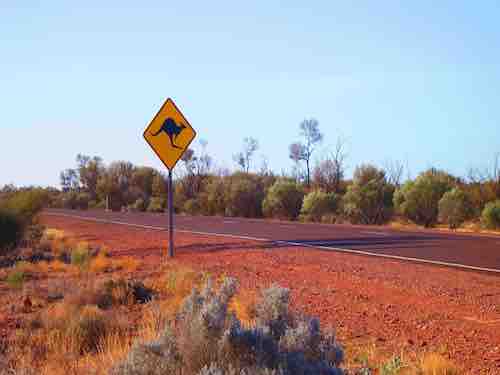
Australia’s working holiday visa programs offer young Americans unique opportunities to live and work for up to three years in the Land Down Under. “Digital nomads” -- remote employees currently working from home or overseas – and university students ages 18-30 can apply for the program.
Unlike other countries that introduced digital nomad programs to boost tourism during the pandemic, Australia’s Working Holiday Maker (WHM) temporary visa program was suspended during the COVID-19 crisis. WHM began in 1975 to encourage young people from Canada, Ireland, and the United Kingdom to spend a year working and touring the commonwealth. It has since grown to dozens to countries and hundreds of thousands of participants. During 2017 and 2018, more than 170,000 WHM applications were granted each year, including more than 2,100 WHM visas for U.S. citizens.
Since spring 2021, the Commonwealth of Australia has only issued any visas in special circumstances. The only travelers who can enter the commonwealth are Australian nationals and permanent residents; their families; and New Zealand nationals who live in Australia. However, the government is still accepting applications for WHM and other visa programs. Since WHM visas are valid for entry up to 12 months after government approval, young people who hope to live and travel in Australia in 2021 or 2022 can still apply and save their place in line to travel when borders reopen.
Touring the Land Down Under
Australia hosted more than 9.4 million visitors in 2019 before the novel coronavirus forced the country to close its borders in early 2020. Government statistics indicated tourism contributed AUD 60.8 billion (USD 46 billion) and employed 666,000 people in 2019.
From the rugged wilderness of the Outback to coastal cities of the Pacific Ocean, Australia draws a steady stream of traditional international tourists, backpackers, and surfers. An island continent in the Southern Hemisphere, Australia features coral reefs, rainforests, red deserts, traditional Aboriginal villages, distinctive wildlife, and numerous UNESCO World Heritage sites.
The Great Barrier Reef Marine Park (the largest reef in the world and one of the seven natural wonders of the world) attracts more than two million visitors annually. The red sandstone rock formation of Uluru (or Ayers Rock) is one of the country’s most recognizable landmarks. Other major natural attractions include Kakadu National Park; Fraser Island, the world’s largest sand island; and whale-watching center Hervey Bay. More than 80% of the commonwealth’s plants, mammals, reptiles and amphibians are unique to Australia, including kangaroos, wallabies, wombats, dingoes, koalas, and the platypus. The 330-mile Great Ocean Road offers waterfalls, hiking trailers, and spectacular views of rock formations.
Metropolitan cities such as the coastal cities of Sydney, Melbourne, and Brisbane offer sophisticated cuisine, modern accommodations, upscale shopping, casinos, and unique attractions. The Sydney Opera House and the Sydney Harbor Bridge comprise one of the world’s most iconic architectural images. Bondi Beach, only 15 minutes from Sydney, is popular with the world’s surfers and sunbathers. Melbourne, the second largest city in the country, has a sophisticated European flavor accentuated by galleries, theaters, restaurants, shops, and produce markets. Brisbane, the third-most popular city for tourists, serves as the gateway to the surf havens of the Gold Coast and the Sunshine Coast.
The cost of living in Australia ranks in the Top 15 in most global studies, averaging 9% higher than the United States but 10% less than the United Kingdom. According to Numbeo, (https://www.numbeo.com/cost-of-living/country_result.jsp?country=Australia), the overall cost of living in Australia is 15.3% higher than in the United States. However, rents are 8% lower Down Under, the report noted.
Applying for the Australian Work and Holiday Visa
Australia offers two types of work/tourism visas for young travelers: the Work and Holiday Visa (subclass 462) and the Working Holiday Visa (subclass 417). The programs are virtually identical, with eligibility based on which country’s passport applicants already hold. U.S. residents can only apply for subclass 462.
The online application and related information for the 462 visa can be found at (https://immi.homeaffairs.gov.au/visas/getting-a-visa/visa-listing/work-holiday-462/first-work-holiday-462#HowTo). The application fee is AUD 485 (about $370 U.S) for the first visa, with additional fees up to two more years. The government processes 75% of applications within 12 weeks and 90% within four months. You will be able to enter Australian within the 12 months following approval, and use the first year visa the next 12 months.
Basic requirements include:
- Valid passport from an eligible country (such as the United States).
- Between the ages 18 and 30. (NOTE: up to 35 for Canada, France, and Ireland).
- Cannot be accompanied by dependent children.
- Complete at least a high school diploma.
- Have AUD 5000 ($3,800 U.S.) in funds in your bank account to support yourself during your stay -- above and beyond wages you may earn.
The government may also ask you to certify your character (i.e., no criminal record) and/or undergo a health examination after receiving your application. Passport holders from outside the United States may also be required to have completed at least two years of college, demonstrate a functional command of the English language, and/or obtain a letter of government support for their applications.
Other Considerations for Workers
The WHM visas allow you to enter and exit Australia as many times as you like during the 12-month period. You can study for up to four months and do short-term work to help pay your way around the country. Generally, you cannot work for the same employer for more than six months, but there are some exceptions to the rule.
If you plan to extend your stay with a second subclass 462 visa, you will have to complete three months of work in specified industries and sectors such as agriculture, construction, medical, and bushfire recovery during your first year. (For the full list of eligible industries, visit https://immi.homeaffairs.gov.au/visas/getting-a-visa/visa-listing/work-holiday-462/specified-462-work.) If you plan on applying for a third 12-month working visa, you will need to have completed six months of work in key industries. However, during your second and third years, you can free to work in whatever field you like once minimum work requirements are met.
There are a number of ways to find work once you arrive in Australia. Job posting bulletin boards are common at hostels and cafes. There are Facebook groups listing local jobs geared towards backpackers and other temporary visitors, as well as general sites such as GumTree, JobSearch, and the Backbacker Job Board. You may also need to obtain an Australian tax file number and pay taxes, depending on how much you earn during your trip.
From more information about the Australian Work and Holiday visa -- or about digital nomad programs in other countries -- contact Visa Supply at Contact Us : visasupply.com.