

How to Apply for an Australia Visa in Salt Lake City
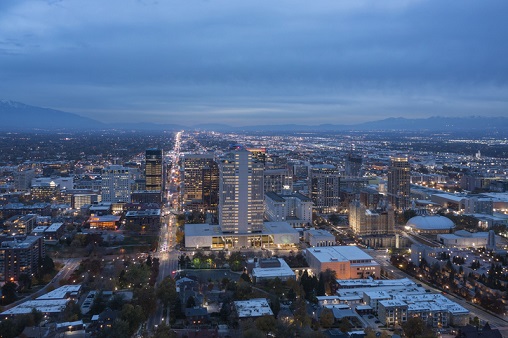
Australia continues to grow as a popular destination for tourists, businesspeople and students living in the Salt Lake City area and other towns throughout Utah. The country offers numerous visas that allow foreign citizens living in the United States and well as U.S. passport holders to visit the Land Down Under – and depending on your nationality, you may be able to get travel authorization within 24 hours!
The Commonwealth of Australia is the largest country in Oceania and the most populous at 27.7 million people (who mostly live in coastal urban areas). It is also the largest island and sixth largest country in the world, covering almost three million square miles on the continent of Australia, Tasmania, and several other nearby islands. Due to its unique geographic location in the South Pacific, Australia is a country of vastly diverse climates, landscapes, and wildlife, with lush tropical rainforests in the northeast, mountains to the southeast, deserts in its midsection, and sun-drenched maritime beaches.
“Australia is the unexpected: a place where the world’s oldest cultures share vast ochre plains, stylish laneways, and unimaginably blue waters with successive waves of new arrivals from across the globe,” Lonely Planet reported (https://www.lonelyplanet.com/australia). “There is no shortage of spectacular places,” the publication added, “from culturally diverse cities with rich Aboriginal history dating back tens of thousands of years to the Great Barrier Reef and the raw outback landscapes in between.”
First colonized by Great Britain in 1788 with a penal colony at New South Wales, Australia evolved into six separate colonies before merging in 1901 as the Commonwealth of Australia. By 1986, Australia had transformed from a British colony to an independent nation. While the majority of early Australian citizens originated from the British Isles, more than 30% of the population today is made up of immigrants from Asia and other non-English-speaking nations.
Australia’s economy was long powered by its natural resources, but in recent years the service sector (which includes finance and tourism) has grown to two-thirds of its GDP. Mining, manufacturing, and agriculture are other industries that may attract Salt Lake City-based businesspeople. The United States exported more than $30 billion in goods to Australia in 2022, according to the U.S. International Trade Administration (ITA). “The United States is a major supplier of transportation equipment, machinery, chemicals, electronic products, fabricated metal products, processed foods, electrical equipment, plastics, rubber, primary metal products, and agricultural products and equipment,” ITA stated. The U.S. is also Australia’s top foreign investor at $740 billion. "Attractive service sectors for U.S. exporters include financial services, healthcare, information technology services, and franchising,” ITA continued. (https://www.trade.gov/country-commercial-guides/australia-market-opportunities)
ITA also stated that Australian offers U.S. firms with “notable travel and tourism export opportunities.” In 2023, tourism brought in AUD 252.2 billion ($167.4 billion), accounting for 9.8% of the Australian economy and more than 1.4 million jobs, according to the World Travel & Tourism Council (WTTC), with visitor spending reaching AUD $146 billion. WTTC estimated that in 2024, tourism accounted for 265.5 billion and 10.2% of GDP. (https://wttc.org/news-article/australias-tourism-sector-set-to-contribute-record-breaking-265bn-to-the-economy) Ecotourism, arts/cultural tourism, and events are the top draws. Neighboring New Zealand is the leading source of Australian international visitors, with the United States, the United Kingdom, China, and India typically ranking among the top five.
The coastal cities of Sydney, Melbourne, and Brisbane will likely be the main entry points for Salt Lake City-based travelers visiting Australia as tourists. The country’s largest city is Sydney, one of the 15 most visited cities in the world. Best known for the iconic Sydney Opera House, Sydney Harbour Bridge, and Bondi Beach, the city has more than 2.5 million acres of parks. Marrinawi Cove, a new terraced sandstone swimming spot, is Sydney’s newest hotspot. Melbourne is also home to well-known Australian landmarks, such as the National Gallery of Victoria, the Cricket Grounds, and the U.N. World Heritage-listed Royal Exhibition Building. It is also known for its nightlife: restaurants, bars, comedy clubs, and music venues such as the Espy and the Tote. Brisbane features King George Square, the Story Bridge, St John's Cathedral, the Mount Coot-tha Botanic Gardens and Lookout, Lone Pine Koala Sanctuary, D'Aguilar National Park, and Moreton Bay. The capital city of Canberra (Australia’s largest inland city) is home to the Australian War Memorial, the Australian Institute of Aboriginal and Torres Strait Islander Studies, the National Gallery of Australia, and government sites such as Parliament House and the Australian Mint.
Away from its major cities, Australia has long been popular with backpackers and college students from Salt Lake City area schools such as the University of Utah, Bringham Young University, and Weber State University drawn to its unique natural attractions. The Great Barrier Reef in the Coral Sea off Queensland – another of Australia’s 17 UNESCO World Heritage sites -- is the world's largest coral reef system with more than 2,900 individual reefs and 900 islands encompassing 133,000 square miles. The reefs draw scuba divers, snorkelers, and fishermen from around the world. While surfing is too dangerous around the reefs north of Australia, there remain thousands of miles of safer coastline where surfers can hang ten. Inland draws include Uluru (Ayer’s Rock), the iconic red sandstone formation in the Northern Territory; the vast central plains known as the outback; and the Tasmanian Wilderness. More than 80% of the animals and plants in Australia are not found anywhere else in the world, including kangaroos, dingos, koala, platypus, wallabies, wombats, and the Tasmanian devil.
Australian Entry Eligibility
Foreign nationals, including citizens of the United States living in the Salt Lake City area, are eligible to enter Australia if they obtain either a visa or an electronic travel authority (ETA). The ETA is available to passport holders from the United States and more than two dozen other jurisdictions, while those from other countries must obtain a traditional visa. General requirements for both types of entry documents include:
- Hold a valid passport.
- Possess good character, which primarily means you have no major criminal convictions. Requirements can be found at https://immi.homeaffairs.gov.au/help-support/meeting-our-requirements/character.
- Be in good health, as detailed at https://immi.homeaffairs.gov.au/help-support/meeting-our-requirements/health.
- Have enough money to support yourself during your visit.
- No one in your party owes any outstanding debts to the Australian government.
- Each member of your party (including children) must have their own passport and obtain their own visa/ETA.
- Health Insurance. Although officially not required for entry by the Australian government, we recommend purchasing international medical insurance to cover accidents, injuries, and illnesses while traveling in Australia. International medical insurance from GeoBlue can be purchased from Visa Supply online through the following link: ⇒Order Now.
Obtaining an Electronic Travel Authority (ETA)
Passport holders who are citizens of the United States, Canada, South Korea and most European countries living in the Salt Lake City area can obtain an electronic travel authority (ETA) rather than a traditional visa to visit Australia. The eligible countries are listed at https://immi.homeaffairs.gov.au/visas/getting-a-visa/visa-listing/electronic-travel-authority-601#Eligibility. You can get an ETA without visiting a consulate or embassy in person or mailing an application. They typically have a 24-hour turnover, making them ideal for last-minute journeys.
You must apply for the ETA (subclass 601) through the Australian ETA app, which is available from the Apple and Google Play stores. There is no charge for the ETA itself, although there is an AUD 20 (about $12.50 in early 2025) service fee for using the app. The ETA allows you to enter Australia multiple times over a 12-month period, and you can stay up to three months per visit. Citizens of certain European countries can also obtain a free eVisitor (subclass 651) which is also good for 12 months (https://immi.homeaffairs.gov.au/visas/getting-a-visa/visa-listing/evisitor-651). Neither type of travel authorization can be extended.
Unlike a traditional paper visa, the ETA is linked to your U.S. visa electronically. The ETA allows you to visit Australia as a tourist, businessperson, cruise ship passenger, or for study/training sessions lasting up to three months. However, you cannot get the ETA if you plan to study for more than three months; train in a hospital or childcare center; work; visit for certain other reasons; or if you do not meet the health or character requirements. In those situations, you will need to apply for the traditional visitor visa (subclass 600), as described below.
To obtain the electronic visa, download the Australian ETA app for your mobile device from the Apple Store or Google Play store. You must submit your application outside of Australia. ETA application requirements include having a mobile device that can take a picture of your passport data page; a valid email address; and a payment method to cover the app fee. Details can be found at https://immi.homeaffairs.gov.au/visas/getting-a-visa/visa-listing/electronic-travel-authority-601#HowTo. If you don’t want to use the app, you can also ask a third-party service provider (such as Visa Supply) to complete your application and submit it for you.
After you download and open the app on your mobile device, you need to:
- Scan your passport to pre-fill your name, date of birth, passport number and other details
- Take a photo of yourself
- Answer several questions, including whether you have any criminal convictions, any prior names, and your contact details when you are in Australia
- Pay the service fee
- Submit the application.
You will typically receive notification from the government within 24 hours. Your application may take longer to process if you do not fill out the form correctly, the government decides it needs more information from you, or it takes longer than usual to verify your information.
Obtaining a Traditional Visa from Salt Lake City
The visitor visa (subclass 600) is a fee-based visa that allows people to visit for tourist, business, or other purposes for periods from three to 12 months. The traditional visa is for passport holders from countries that do not qualify for the ETA (primarily located in Africa, Asia, and Latin America), as well as individuals from ETA-eligible countries who do not meet the ETA criteria. Foreign U.S. residents and U.S. citizens living in the Salt Lake City area who cannot obtain an ETA for their trip should visit https://immi.homeaffairs.gov.au/ to learn more about the visa process and obtain an application.
Australia no longer issues visa stamps; instead, your visa will be electronically linked to your passport. Australia offers several types of visas, including:
- Tourism
- Work
- Work and holiday
- Business innovation and investment
- Permanent residence for skilled workers
- Study/training
- Adoption
- Family visits
The full list of visa types can be found at https://immi.homeaffairs.gov.au/visas/getting-a-visa/visa-listing.
Prices and length of stay for the visa vary depending on the type of visit. For example:
- Tourist (applying outside of Australia): AUD 195 ($122.50); three, six, or 12 months.
- Tourist (apply within Australia): AUD 495 ($311); up to 12 months.
- Business: AUD 195; up to three months.
- Sponsored family visit: AUD 195; up to 12 months
Non-U.S. citizens will need to supply a color copy of their passport information page plus:
- Permanent residence card (green card) or valid U.S. visa and I-94 admission record.
- Driver’s license.
- National ID card.
- Travel history showing other international trips.
- Flight itinerary and hotel reservation (or group itinerary if traveling with an organized group).
- Bank statement showing financial ability to support yourself during the trip.
- Mortgage or lease agreement in the United States.
- Proof of employment or self-employment.
You can apply for a visa with a paper application or online by setting up an ImmiAccount (https://immi.homeaffairs.gov.au/help-support/applying-online-or-on-paper/online). Follow the instructions on the ImmiAccount site to fill out your application, attach the required documents, and pay your visa fees. After you apply, the government will use the ImmiAccount to notify you of its decision or request more information. For more information, visit the “online” tab at https://immi.homeaffairs.gov.au/help-support/applying-online-or-on-paper/online. You can also call the Global Service Centre +61 2 6196 0196, weekdays 9-5, for assistance.
While the government prefers online applications, it does still accept paper applications for some types of visas. Applications for visas are not handled by Australian embassies and consulates in the United States, but rather by the Department of Home Affairs in Australia. Check the step-by-step guide on the website above for the individual type of visa you want to obtain to see what application form(s) to use. The list of forms can be found under the “paper” tab at https://immi.homeaffairs.gov.au/help-support/applying-online-or-on-paper/on-paper. Most – but not all -- forms include the mailing address, so you might have to contact the government to find out where to mail the form. The link above shows you the visa fees, required documentation, estimated waiting time, and other necessary details. You will need to provide certified copies of your documents and pay the visa fee at the time of application. More details are also available at the link immediately above.
We Can Help if You Need Assistance
If you live in Salt Lake City or anywhere in the state of Utah and have difficulty applying for a visa for Australia, or require assistance with any part of the visa process, you can call our office at 404-682-5445 or schedule an appointment online at the link on this page. We are a private agency in Atlanta providing Australia visa services for Americans and other U.S.-based residents. Our number one goal is to ensure your application documents for a visa are submitted accurately to the government of Australia. Our services eliminate delays and give you the peace of mind to focus on your travel plans. We provide the following Australia visa services for our customers in Salt Lake City:
- Australia ETA
- Australia Visitor Visa
- Australia Business Visa
- Australia Student Visa
- Australia Work Visa
- Australia Family Visit Visas
- Australia Medical Insurance
- Australia Flight Tickets
- Australia Hotel Accommodations
- Australia Packaged Tours