


Passports and Visas
-
Posted: September 07, 2024Categories: Passports and Visas
 Read more »
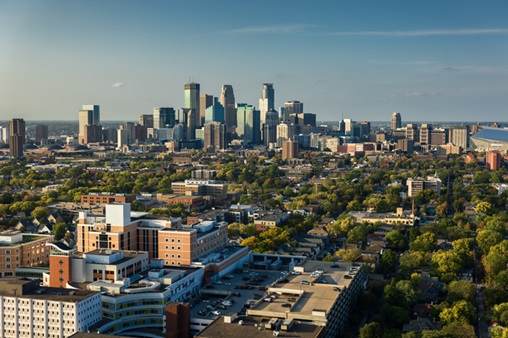
Libya, the North African nation plagued by civil war and political unrest for more than a decade, has recently begun promoting foreign investment and tourism as it struggles towards political and social stability. In early 2024, the Libyan government launched a strategic initiative to boost business development to help it achieve long-term economic stability. Despite some progress, armed conflicts between rebels and tourists continue to plague the country, making this an unlikely travel destination for most people living in Minneapolis. “Do not travel to Libya due to crime, terrorism, unexploded landmines, civil unrest, kidnapping, and armed conflict,” the U.S. State Department warns on its website. “Crime levels in Libya remain high, including the threat of kidnapping for ransom. U.S. citizens have been targets of these crimes.” (https://travel.state.gov/content/travel/en/traveladvisories/traveladvisories/libya-travel-advisory.html
Bordered by Egypt, Sudan, Chad, Niger, Algeria, Tunisia, and the Mediterranean Sea, Libya has a population of almost seven million people (which is about the same size as Tennessee’s population). The vast majority of those people are Islamic Arabs who live along the coastline. It is the fourth-largest African country and is largely covered by the Libyan Desert. The regions known as Libya have been inhabited since ancient times, ruled by the Greek, Roman, Spanish, and Ottoman empires before becoming an Italian colony in the early Twentieth Century. The State of Libya became an independent country in 1951. The 2011 Libyan Civil War that overthrew dictator Muammar Gaddafi began a decade of armed conflict that largely ended in a 2020 ceasefire. However, parts of the country remain until rebel control.
-
Posted: September 06, 2024Categories: Passports and Visas
 Read more »
Residents of Seattle and the state of Washington looking for lush island beaches, rich cultural attractions, and a relaxed cosmopolitan lifestyle are increasingly drawn to the Kingdom of Bahrain. An archipelago of 33 islands in the Persian Gulf, Bahrain is located between the northeastern coast of Saudi Arabia and Qatar in the Middle East.
The Kingdom of Bahrain has been a constitutional monarchy since 2002. Originally the center of the ancient Dilmun civilization, Bahrain has been ruled by Arabs; became part of the Portuguese Empire; and was a protectorate of Great Britain for almost a century before gaining independence 1971. The country has been famous since ancient times for its pearl fisheries and seagoing trade routes. In 1932, Bahrain became the first Persian Gulf country to discover petroleum, transforming the country into one of the wealthiest nations in the world. Its strategic position in the Persian Gulf accounts for the U.S. Naval Support Activity (NSA) station there.
-
Posted: September 05, 2024Categories: Passports and Visas
 Read more »
The Republic of Niger, the second-largest landlocked nation in Africa, is among the poorest and least visited countries for residents of the Phoenix area. “Niger might be a challenging destination to travel around, but rewards abound for those willing to persevere,” World Travel Guide stated recently (https://www.worldtravelguide.net/guides/africa/niger). “A country shaped by Saharan trade routes, visitors came and went through this land for centuries, leaving behind them a wonderful fusion of Arab and African traditions.” The publication added, “With political stability returning to this West African nation, it is slowly opening up to tourists.”
The country was part of French West Africa during the European colonial before attaining independence in 1960. Since then, it has endured five coup d’états and four periods of military rule, as well as several armed rebellions. About 80% of Niger’s 490,000 square miles (an area that is about 3 ½ times the size of Arizona) lies in the plains and sand dunes of the Sahara Desert to the north. However, most of its 28.1 million people live along the flat to rolling savannas of the south and west. The country borders Libya, Chad, Nigeria, Benin, Burkina Faso, Mali and Algeria. The Niger River, third longest in Africa, winds some 2,600 miles across the continent before it reaches the Atlantic Ocean at the Niger Delta. The country is home to numerous ethnic groups, with the Hausa making up 55% of the population. Niger has 10 official languages, and French is still used by the government.
-
Posted: September 04, 2024Categories: Passports and Visas
 Read more »
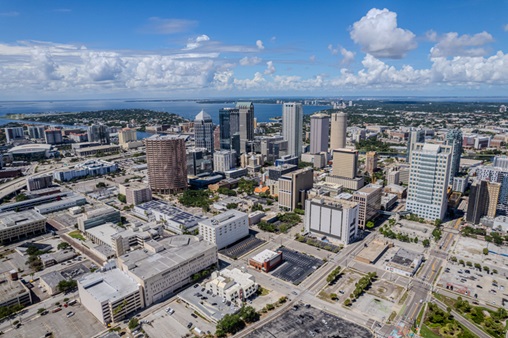
The number of foreign visitors visiting Kenya has grown to more than 1.5 million people each year, with citizens of the United States helping propel that surge. Some 220,000 Americans visit Kenya each year – more than those from any other country. Residents of the Tampa-St. Petersburg Metropolitan Area visit Kenya for African vacations, to pursue business opportunities, to visit family, or to participate in volunteer activities through non-profits and church groups.
From Indian Ocean beach holidays to inland wildlife safaris, the Republic of Kenya saw tourism surge by more than 80 percent in the post-COVID era. “Kenya is a dream travel destination for its abundant wildlife, spectacular beaches, outdoor adventure, culture, and cuisine,” AFAR magazine reported recently. “The country boasts 22 national parks, as well as 28 national reserves, five national sanctuaries, and dozens of community-run conservancies.”
-
Posted: September 03, 2024Categories: Passports and Visas
 Read more »
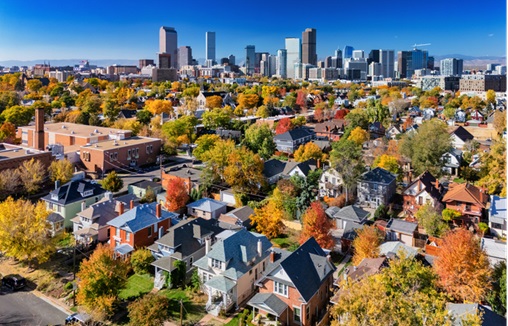
The small East African nation of Djibouti is an uncommon leisure travel destination for residents of Denver. The smallest and least-populated nation in Africa (population 1.1 million) is known mainly for its strategic military and geopolitical importance. However, the multi-ethnic and multi-lingual country has welcomed foreign travelers for centuries with its warm hospitality and diverse natural features.
“Nestled in the Horn of Africa, Djibouti is a little piece of heaven for nature and history lovers, food enthusiasts, and anyone intrigued by the ethnic composition of this tiny land inhabited since the Neolithic Age.,” according to a profile on the Culture Trip website (https://theculturetrip.com/africa/djibouti/articles/12-reasons-why-you-should-visit-djibouti-at-least-once-in-your-lifetime ). “Djibouti is home to three ethnic groups that live side by side in harmony and peace. Somali, Afar and Arabs have been coexisting together here since the Ifat Sultanate that dates back to the 12th century.”
-
Posted: September 02, 2024Categories: Passports and Visas
 Read more »
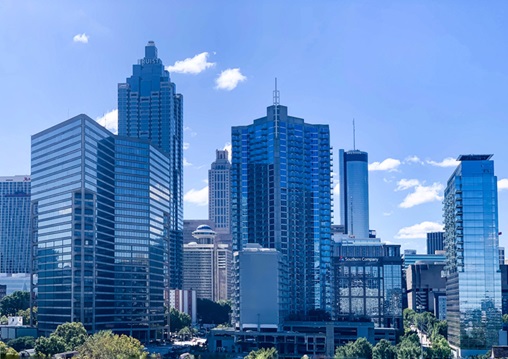
Thailand’s popularity as a retirement destination for foreigners has been boosted by the recent addition of a 10-year long-term retirement visa. Warm weather, majestic mountains, sandy beaches, lush tropical jungles, vibrant marketplaces, spicy food, state-of-the-art healthcare, and low prices make this exotic Southeast Asian kingdom an attractive destination for retirees in the Atlanta area who are ready for the next chapter of their lives.
More than 70 million people live in Thailand, including three million foreigners -- with retirees making up a significant percentage of those expats. The U.S. State Department estimates that some 30,000 American expats live in Thailand (including retirees). A U.S.-Thailand tax treaty that avoids double taxation exempts Social Security and other U.S. pension payments from Thai taxation. Discounts on already-low prices for seniors on public transportation, museums, and some tourist destinations add to the appeal for those living on fixed incomes.
-
Posted: September 01, 2024Categories: Passports and Visas
 Read more »
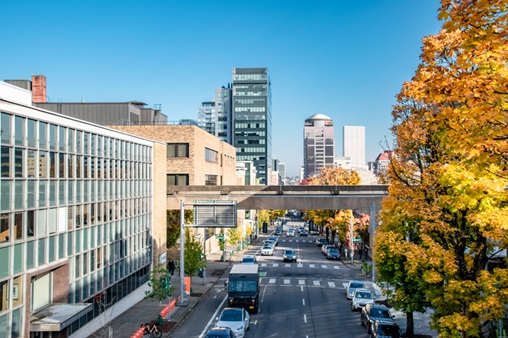
Papua New Guinea, the most populous Pacific Ocean country and largest by land mass, is rebounding as a leisure and business travel destination despite concerns about civil unrest and crime. The country reported 140 million visitors in 2023, a 116% increase over the prior year but still below pre-pandemic levels. (https://www.postcourier.com.pg/png-tourism-records-significant-growth-in-visitor-arrivals-for-2023/) While the country is likely off the radar for most residents of the Portland area, Papua New Guinea may be considered by some adventurous travelers as an add-on to an Australia or Southeast Asia itinerary.
Located just north of Australia, Papua New Guinea occupies the western half of the island of New Guinea, while the eastern half is part of Indonesia. The northern part of the country was occupied by Germany during the Nineteenth Century and administered by Australia following World War I. The southern part became British New Guinea in 1888. The two areas became the Independent State of Papua New Guinea in 1975 and remains part of the British Commonwealth of Nations. However, for decades since it became a sovereign nation, it has been plagued by civil unrest, corruption, tribal tensions, and political violence. “Reconsider travel to Papua New Guinea due to crime, civil unrest, and piracy,” the U.S. State Department advises (https://travel.state.gov/content/travel/en/traveladvisories/traveladvisories/papua-new-guinea-travel-advisory.html). “Exercise increased caution due to kidnapping, unexploded ordnance, inconsistent availability of healthcare services, and potential for natural disasters.” Similarly, the British government “advises against all but essential travel to parts of Papua New Guinea.” (https://www.gov.uk/foreign-travel-advice/papua-new-guinea)
-
Posted: August 31, 2024Categories: Passports and Visas
 Read more »
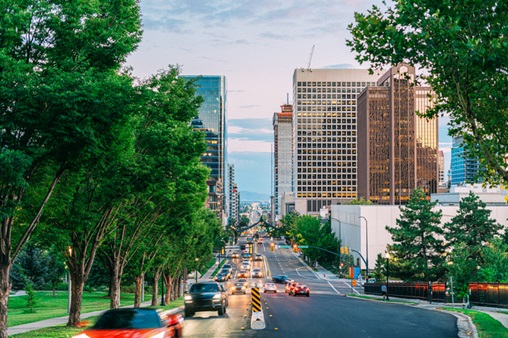
Bhutan, the world’s most mountainous country, covers some 15,000 square miles in the Eastern Himalayas. Bordered by India and China's Tibet Autonomous Region, landlocked Bhutan is 98.8% mountains and more than 70% forested. Officially the Kingdom of Bhutan, the country is known locally as Drukyul. Bhutan is a constitutional monarchy with a king serving as head of state and a prime minister leading the government. Bhutan is home to some 778,000 residents, ranking it 165th among the world’s 234 countries and dependent territories (By comparison, the population of Bhutan is about 60% the size of the the Salt Lake City metropolitan area).
Bhutan and Tibet were among the first countries where Buddhism spread from India in the Seventh Century AD. Vajrayana Buddhism, Bhutan’s state religion, is led by the Zhabdrung Rinpoche, a spiritual leader similar to Tibet’s Dalai Lama. The “land of the thunder dragon” is “a place where people can find peace and do business, experience living traditions, and discover wilderness teeming with life,” according to the official Bhutan Travel website (https://bhutan.travel). “In a world that is always on the go, Bhutan provides sanctuary. Here, you can find earthly pleasures: archery and age-old crafts, dishes of home-made cheese and fearsomely hot chilies, breathtaking treks and restorative hot-stone baths.” Prayer flags are strung across gorges and dot every hillside, Bhutan Travel continued. “From storied cities to soaring mountains, the door to the kingdom is open once again to old and new friends.”
-
Posted: August 30, 2024Categories: Passports and Visas
 Read more »
Equatorial Guinea, one of the smallest countries in Africa (both by land area and population), is also the only Spanish-speaking nation on the continent. To put it in context with the United States, Equatorial Guinea’s population of 1.7 million people is about half a million fewer than the population of the Cincinnati metropolitan area. This Central African country consists of five islands in the Gulf of Guinea near the equator plus a mainland region bordered by Cameroon and Gabon. Although one of the wealthiest nations in Africa, most of its people live in poverty while the elites live in opulence. “This is the land of primates with painted faces, soft clouds of butterflies, and insects so colorful they belong in the realm of fiction,” Lonely Planet noted (https://www.lonelyplanet.com/equatorial-guinea). “Yes, Equatorial Guinea has something of a reputation, with a history of failed coups, allegations of corruption, and buckets of oil, but there is plenty to bring you to this country's beautiful black-and-white shores.”
Officially the Republic of Equatorial Guinea, the country was known as Spanish Guinea before gaining independence in 1968. Spanish, French, and Portuguese are the country’s official languages, but several local dialects are also common. Dictator Teodoro Obiang Nguema Mbasogo has ruled since 1979, making him one of the longest-serving leaders in the world. “Exercise increased caution in Equatorial Guinea due to crime and health,” the U.S. State Department cautions. “While not common, crime - such as robbery - remains a concern throughout Equatorial Guinea. Police and military checkpoints are common throughout the country.” (https://travel.state.gov/content/travel/en/traveladvisories/traveladvisories/equatorial-guinea-travel-advisory.html).
-
Posted: August 29, 2024Categories: Passports and Visas
 Read more »
The Central African Republic, a landlocked nation at the heart of the continent, is one of the least visited countries for residents of the Dallas-Fort Worth metroplex. Despite its vast natural resources, the country is one of the poorest and most fragile countries in the world. It also ranks as the unhealthiest, the worst country for children, and among the bottom 10 for education and hunger. “It’s never a good sign when you land in a country and the first thing you see are planes from the United Nations, World Food Programme or Médecins Sans Frontiers {Doctors without Borders},” the travel blog Road to 197 reported in 2024 (https://www.roadto197.com/2024/01/14/trip-report-central-african-republic/). “In such situations you realize that things are not good in the country, that the country has serious issues….”
Known as French Equatorial Africa during the European colonial period, the Central African Republic (CAR) attained independence in 1960. Ruled for 15 years by brutal dictator Jean-Bedel Bokassa, the country has since endured decades of civil war, corruption, and human rights abuses. “Do not travel to the Central African Republic (CAR),” the U.S. State Department warns, citing violent crimes, kidnappings, and armed rebels. “Although there have been no specific incidents of violence or threats targeting U.S. citizens, civil unrest, demonstrations, and election-related violence (including renewed outbreaks of armed conflict) may occur throughout the country.” (https://travel.state.gov/content/travel/en/traveladvisories/traveladvisories/central-african-republic-travel-advisory.html) More than 15,000 UN peacekeepers were in the CAR during 2024.